
Warehouse Optimization
 Roeslan Ozdoyev14 min read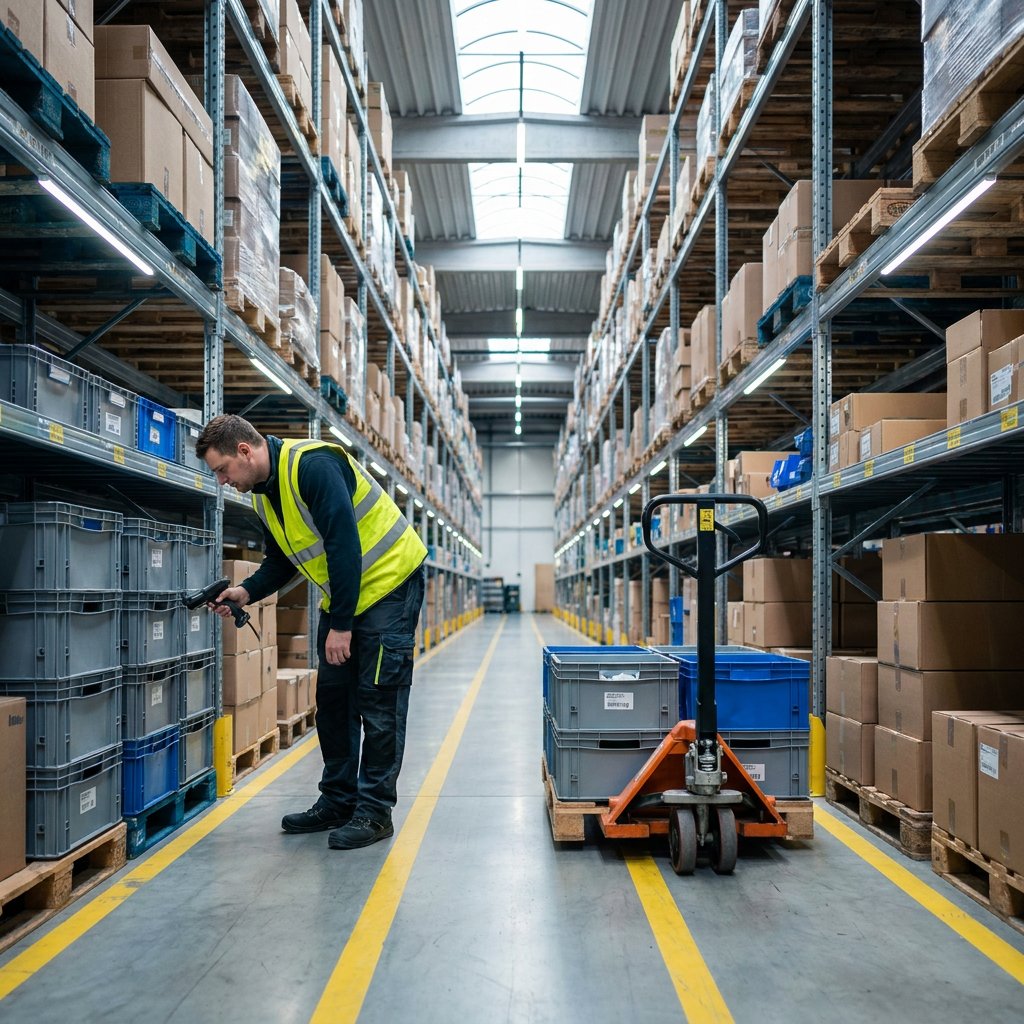
Warehouse optimization is how you improve the way inventory moves through your operation, from receiving and putaway to storage, picking, packing and shipping. When your warehouse is organized around flow instead of workarounds, you reduce travel time, use space better, improve inventory accuracy and ship orders with fewer delays. For businesses managing growing volumes, more SKUs and higher customer expectations, warehouse optimization is no longer optional. It is one of the clearest ways to improve service, control cost and build a more reliable logistics operation.
Whether you are looking at warehouse space optimization, warehouse layout optimization, warehouse slotting optimization or a broader warehouse optimization system, the goal stays the same: make your warehouse easier to run, easier to scale and less prone to mistakes.
What warehouse optimization means in practice
At a practical level, warehouse optimization means redesigning processes, storage logic and supporting systems so your operation can handle inventory more efficiently. It is not limited to automation or a software rollout. You can optimize warehouse operations by changing slotting rules, reducing unnecessary movement, improving replenishment timing, tightening inventory controls and rethinking layout decisions that slow your team down.
A strong warehouse optimisation approach usually touches the following areas:
- Receiving and putaway flow
- Warehouse storage optimization and space usage
- Slotting optimization in warehouse locations
- Warehouse picking optimization and pick path optimization
- Inventory visibility and replenishment control
- Packing, staging and shipping coordination
- Performance measurement through warehouse KPIs
For some businesses, the focus is narrow, such as warehouse racking optimization or warehouse route optimization. For others, it is a broader warehouse management optimization project involving layout, labor, software and continuous improvement.
Why optimizing your warehouse matters
Your warehouse affects far more than storage. It influences order speed, labor efficiency, stock accuracy, customer experience and your ability to grow without adding waste. If inventory is hard to find, replenishment is delayed or pickers take long routes through poorly arranged aisles, the cost shows up everywhere: lower throughput, more errors, more overtime and slower response to demand.
When you optimize warehouse efficiency, you typically gain value in four areas:
- Lower operating cost - less walking, less rework, better labor utilization and fewer avoidable touches
- Higher accuracy - fewer picking mistakes, fewer stock discrepancies and fewer order corrections
- Better space utilization - improved warehouse capacity optimization without immediately expanding the building
- Faster order flow - shorter cycle times from inbound receipt to outbound shipment
These improvements also support broader logistics performance. A warehouse that runs with fewer delays and cleaner data makes transportation planning easier, reduces exceptions and gives you more control across the supply chain.
Common warehouse optimization challenges
Most warehouse inefficiencies come from a small number of recurring problems. These issues often develop gradually, especially when volume grows faster than processes mature.
Poor inventory accuracy
If system stock does not match physical stock, planning, replenishment and picking all suffer. Teams waste time searching, orders get delayed and stockouts occur even when items are technically in the building.
Inefficient layout and wasted travel
Many operations grow into their layout instead of designing one intentionally. Fast movers may be too far from packing, replenishment routes may cross picking traffic and dock-to-storage flow may create bottlenecks.
Weak slotting logic
Without clear slotting optimization, high-frequency SKUs can end up in poor locations, while slow movers occupy premium space. This increases travel distance and slows order fulfillment.
Manual, disconnected processes
Spreadsheets, delayed updates and disconnected tools create lag in decision-making. A warehouse optimization system should improve visibility, not add complexity.
Inconsistent picking and replenishment
When pick faces are not replenished at the right time or pick paths are not optimized, productivity drops and error risk rises. This is a frequent cause of avoidable labor cost.
Warehouse layout optimization and space utilization
Warehouse layout optimization is one of the highest-impact improvements because it affects nearly every movement in the building. A good layout reduces congestion, supports cleaner flow and makes it easier to scale volume without constant firefighting.
When reviewing your layout, look at the path inventory takes from receiving to storage, from storage to picking and from picking to packing and dispatch. The closer that path matches actual demand patterns, the more efficient the warehouse becomes.
What an ideal warehouse layout aims to achieve
- Short travel distances for high-frequency tasks
- Clear separation of inbound, storage, picking and outbound activity
- Storage zones based on product velocity, size and handling needs
- Safe, readable aisle design and labeling
- Enough flexibility to handle seasonal peaks and SKU changes
Key areas to review in a warehouse layout
Dock placement
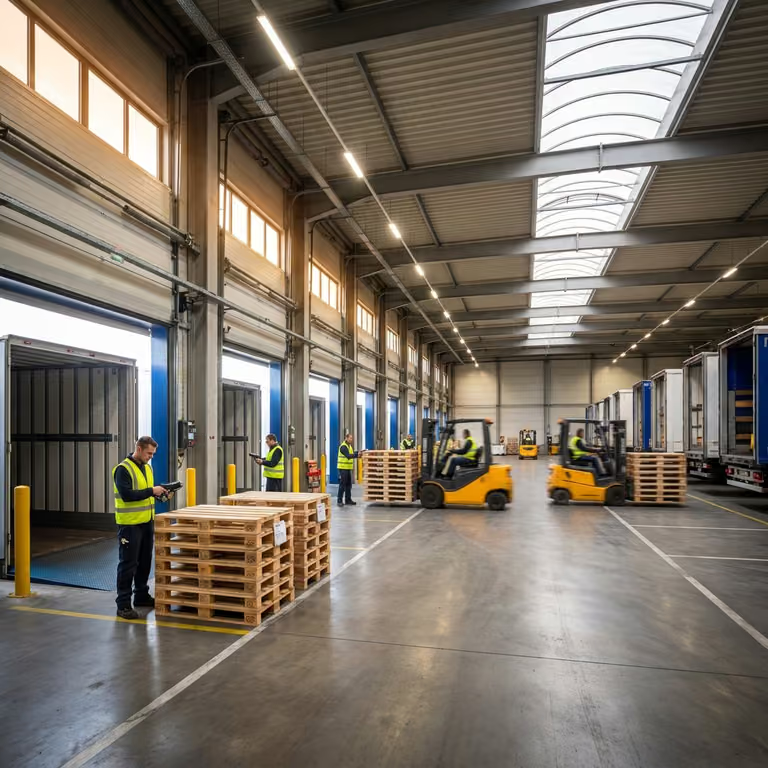
Inbound and outbound docks should support smooth flow rather than forcing inventory through congested zones. Poor dock placement can create queues, unnecessary touches and longer putaway time.
Aisle configuration
Aisle width, orientation and traffic rules directly affect speed and storage density. The best configuration balances accessibility, equipment requirements and storage capacity.
Storage zone design
Products should be grouped by movement, dimensions, risk profile and operational compatibility. This is a core part of warehouse storage optimization.
Vertical and dense storage use
Maximizing warehouse space utilization often depends on using height better, improving racking strategy and avoiding prime space being wasted on low-turn items.
If you are exploring warehouse space optimization or storage space optimization, layout should be one of the first places you assess. In many cases, better flow and smarter zoning deliver meaningful gains before major capital investment is needed.
Warehouse slotting optimization
Warehouse slotting optimization is the process of assigning products to the best possible storage and pick locations based on demand, order frequency, item dimensions, handling constraints and product relationships. It is one of the most practical ways to improve warehouse picking optimization because it directly reduces travel time.
In many warehouses, the biggest productivity drain is not picking itself, but the distance between picks. Slotting optimization solves this by moving the right products closer to where they are needed.
How slotting optimization works
- Fast movers are placed in the most accessible pick locations
- Frequently ordered items together are stored near each other
- Heavy or awkward items are placed where handling is safer and faster
- Seasonal or promotional SKUs are repositioned based on changing demand
- Reserve stock and pick-face stock are aligned to replenishment logic
Slotting warehouse optimization also depends on accurate product data. If dimensions, velocity data or order history are unreliable, the slotting plan will be weaker. This is why slotting optimization is closely linked to inventory control and system quality.
Businesses may also search for SAP slotting or SAP warehouse management optimization when working within an ERP-driven environment. The principle remains the same regardless of platform: location decisions should be driven by data, not habit.
Warehouse picking optimization and pick path optimization
Warehouse picking optimization focuses on making the picking process faster, more accurate and less physically wasteful. In most operations, picking is one of the most labor-intensive activities, which means even small improvements can have a large financial impact.
One of the most effective levers is warehouse pick path optimization. If pickers follow inefficient routes, cross high-traffic areas or revisit the same zones too often, productivity falls quickly.
Ways to improve picking efficiency
- Reduce travel distance through better slotting
- Use logical picking routes and picking route optimization
- Separate fast-pick zones from slower reserve storage
- Use clear labeling and location accuracy controls
- Align batch, zone or wave picking methods to order profiles
- Replenish pick faces before shortages interrupt flow
Pick path optimization should fit the actual warehouse design. There is no single route model that works for every operation. A compact storeroom optimization project needs a different approach than a high-volume distribution center optimization program.
You should also measure picking performance with the right KPIs, such as picks per hour, order accuracy, travel time per order and re-pick frequency. These metrics help you identify whether the problem is route design, slotting, replenishment timing or training.
Inventory management as the foundation of warehouse optimization
Inventory accuracy sits underneath nearly every warehouse improvement. If your stock data is delayed or unreliable, layout decisions, slotting logic, replenishment rules and labor planning all become less effective. That is why strong warehouse management optimization often starts with inventory discipline.
Better inventory control supports:
- Fewer stockouts and fewer emergency replenishments
- Lower risk of overstock and dead stock
- More accurate slotting and space planning
- Cleaner order promising and service levels
- Faster root-cause analysis when exceptions occur
Real-time inventory updates, routine cycle counting, clean location management and structured exception handling all contribute to more stable warehouse performance. If you want to optimize warehouse operations sustainably, inventory accuracy cannot be treated as a side task.
The role of a warehouse optimization system
A warehouse optimization system can mean different things depending on the operation. In some businesses, it refers to the combination of a WMS, scanning tools, analytics and process controls that improve execution. In others, it may include automation, slotting software or broader workflow orchestration.
The system itself is not the goal. The goal is better decisions and more consistent execution. Technology adds value when it helps you:
- Track inventory movements in real time
- Guide receiving, putaway, replenishment and picking tasks
- Reduce manual data entry and avoid duplicate work
- Improve warehouse route optimization through task logic
- Measure KPI performance accurately
- Spot bottlenecks before they become service failures
Many companies make the mistake of treating software as the full solution. In reality, warehouse optimization solutions work best when process design, location logic and team execution are improved alongside the system.
How to optimize warehouse operations step by step
If you are planning a warehouse optimization project, the most effective path is usually phased rather than disruptive. You do not need to redesign everything at once. Start with visibility, identify the highest-friction areas and prioritize improvements with measurable impact.
1. Assess your current operation
Map the current flow of inventory, labor and information. Review receiving, putaway, slotting, replenishment, picking, packing and shipping. Look for bottlenecks, long travel routes, congestion points, inventory mismatches and inconsistent work methods.
2. Define clear objectives
Set measurable goals tied to performance. Examples include reducing order cycle time, improving inventory accuracy, increasing picks per hour, reducing cost per order or improving warehouse capacity optimization.
3. Prioritize layout, slotting and inventory fixes first
Before investing heavily in automation, improve the basics. Many warehouses unlock major gains by addressing layout friction, poor slotting and weak location accuracy.
4. Align technology to operational need
Choose systems and tools that solve a clear problem. That may mean better scanning discipline, stronger reporting, task logic improvements or deeper warehouse management optimization through software integration.
5. Train the team and standardize execution
Even strong process design fails if work methods vary by shift or by person. Standard work, clear labeling and consistent training reduce error rates and make improvements stick.
6. Monitor results and improve continuously
Warehouse optimization is not a one-time event. Reassess layout, slotting and workflow regularly as volumes, SKU mix and customer requirements change.
Best practices that improve warehouse efficiency
The strongest optimization programs usually combine a few core practices rather than chasing one big fix. If you want to optimise warehouse performance in a practical way, focus on the changes that improve repeatability and reduce wasted motion.
- Use ABC logic for product placement - high-velocity SKUs should occupy the most efficient pick locations
- Shorten travel wherever possible - travel reduction is one of the fastest ways to optimize warehouse efficiency
- Separate reserve and pick-face logic - this supports smoother replenishment and better picking flow
- Standardize receiving and putaway - cleaner inbound handling improves downstream accuracy
- Review racking and storage density - warehouse racking optimization can unlock capacity without relocating
- Measure what matters - use a focused KPI set rather than too many vanity metrics
- Keep data current - strong decisions depend on real-time visibility
- Design for growth - warehouse design optimization should support future SKU and volume changes, not just current conditions
Warehouse KPIs that show whether optimization is working
You cannot improve what you do not measure. The best warehouse KPIs tell you whether changes in layout, slotting, labor or systems are delivering real operational value.
KPI | What it shows | Why it matters
|
|---|---|---|
Inventory accuracy | How closely system stock matches physical stock | Supports replenishment, picking and reliable planning |
Picks per hour | Picker productivity over time | Highlights route, slotting and process efficiency |
Order accuracy | Percentage of orders shipped correctly | Reduces returns, rework and customer issues |
Order cycle time | Time from order release to shipment | Shows speed of execution across the operation |
Storage utilization | How effectively available space is used | Supports warehouse space optimisation and capacity planning |
Cost per order | Total warehouse handling cost per order | Connects operational change to financial impact |
For most businesses, a smaller KPI set used consistently is more useful than a long dashboard with little action behind it.
Warehouse optimization trends shaping 2026
Warehouse optimization in 2026 is increasingly shaped by better data, more adaptive systems and selective automation. Not every business needs advanced robotics, but most can benefit from stronger visibility and smarter decision-making.
AI and predictive analytics
AI is increasingly used to support slotting recommendations, demand forecasting, labor planning and replenishment timing. It is especially valuable where order profiles shift frequently.
Robotics and automation
Warehouse automation optimization can include autonomous movement, conveyor support, automated storage and retrieval or guided picking workflows. The right fit depends on throughput, SKU profile and investment horizon.
Real-time operational visibility
Connected systems make it easier to detect bottlenecks, inventory exceptions and service risks sooner. This improves responsiveness without relying on manual reporting.
Sustainability through efficiency
Better layouts, denser storage, reduced travel and more accurate inventory handling can lower energy use and waste. Sustainability is often a result of efficiency, not a separate project.
What to consider before starting a warehouse optimization project
Before launching a warehouse optimization project, make sure you understand the business case. Not every opportunity requires a major redesign, and not every process problem should be solved with new software or equipment.
Ask these questions first:
- Where is the biggest friction today: inbound, storage, replenishment, picking or outbound?
- Are your data and inventory records reliable enough to support change?
- Are you solving a capacity issue, a flow issue, an accuracy issue or all three?
- Can layout and slotting changes solve the problem before capital investment is needed?
- Which KPIs will prove the project is successful?
This kind of structured review helps you avoid overcomplicating the solution and keeps the focus on measurable improvement.
How Ocean Quest Logistics fits into the bigger warehousing picture
For businesses reviewing their logistics setup, warehouse performance does not exist in isolation. Storage flexibility, shipment coordination, data visibility and fewer process errors all affect how efficiently goods move through the supply chain. Ocean Quest Logistics positions its warehousing solutions around secure, flexible storage without long-term contracts or wasted space, supported by a broader logistics approach focused on automation, strict checks and centralized real-time data. Readers looking for related operational guidance can find more warehouse insights on our blog.
That matters because strong warehouse performance depends on operational clarity. When storage, handling and shipment coordination are managed with cleaner information and fewer avoidable delays, it becomes easier to support reliable logistics execution across the wider network. If you want support improving warehouse performance, contact our team.
FAQ about warehouse optimization
What is warehouse optimization?
Warehouse optimization is the process of improving warehouse layout, inventory handling, picking, storage and workflow so goods move faster, more accurately and at lower cost. It can include warehouse layout optimization, slotting optimization, inventory controls, process redesign and supporting technology.
What are the 5 KPIs for a warehouse?
Five essential warehouse KPIs are inventory accuracy, picks per hour, order accuracy, order cycle time and cost per order. Together, they show whether your warehouse is improving in speed, quality, productivity and cost control.
What is the 5S rule in warehousing?
The 5S rule is a workplace organization method built around Sort, Set in order, Shine, Standardize and Sustain. In warehousing, it helps reduce wasted motion, improve safety, make locations easier to identify and support more disciplined daily execution.
What is the 80 20 rule in warehouse operations?
The 80 20 rule, often linked to the Pareto principle, suggests that a small share of SKUs often drives a large share of order activity. In practice, this helps guide warehouse slotting optimization by placing the highest-demand items in the most accessible picking locations.
How do you optimize warehouse space?
Warehouse space optimization starts with reviewing layout, storage zones, rack usage, slotting logic and product velocity. The goal is to improve space utilization without harming flow. Better zoning, vertical storage use and smarter product placement often create capacity without expanding the footprint.
What is slotting optimization in warehouse management?
Slotting optimization is the process of assigning products to the best storage and pick locations based on movement, size, handling needs and order patterns. It reduces travel time, improves picking speed and supports better replenishment flow.
What is pick path optimization?
Pick path optimization improves the route a picker follows through the warehouse. By reducing unnecessary walking and avoiding congestion, it increases picks per hour and lowers labor cost.
How can you optimize warehouse efficiency without major automation?
You can optimize warehouse efficiency by improving slotting, tightening inventory accuracy, redesigning layout flow, reducing travel distance, standardizing work methods and using focused KPI tracking. Many warehouses see meaningful gains before investing in advanced automation.
What is the difference between warehouse optimization and distribution center optimization?
Warehouse optimization usually focuses on improving storage, picking, inventory and internal flow within one facility. Distribution center optimization may include those same areas but often places more emphasis on throughput, network positioning, outbound flow and service responsiveness across a broader distribution model.
How often should you review warehouse layout and slotting?
You should review layout and slotting whenever order profiles, SKU mix, storage demand or throughput patterns change materially. For many operations, a scheduled review every quarter or every peak season is a practical minimum.
Ready to move your next shipment?
Tell us what you're moving, where it needs to go and how often. We'll work out the right setup from there.