

Cross Docking Warehouse
 Roeslan Ozdoyev10 min read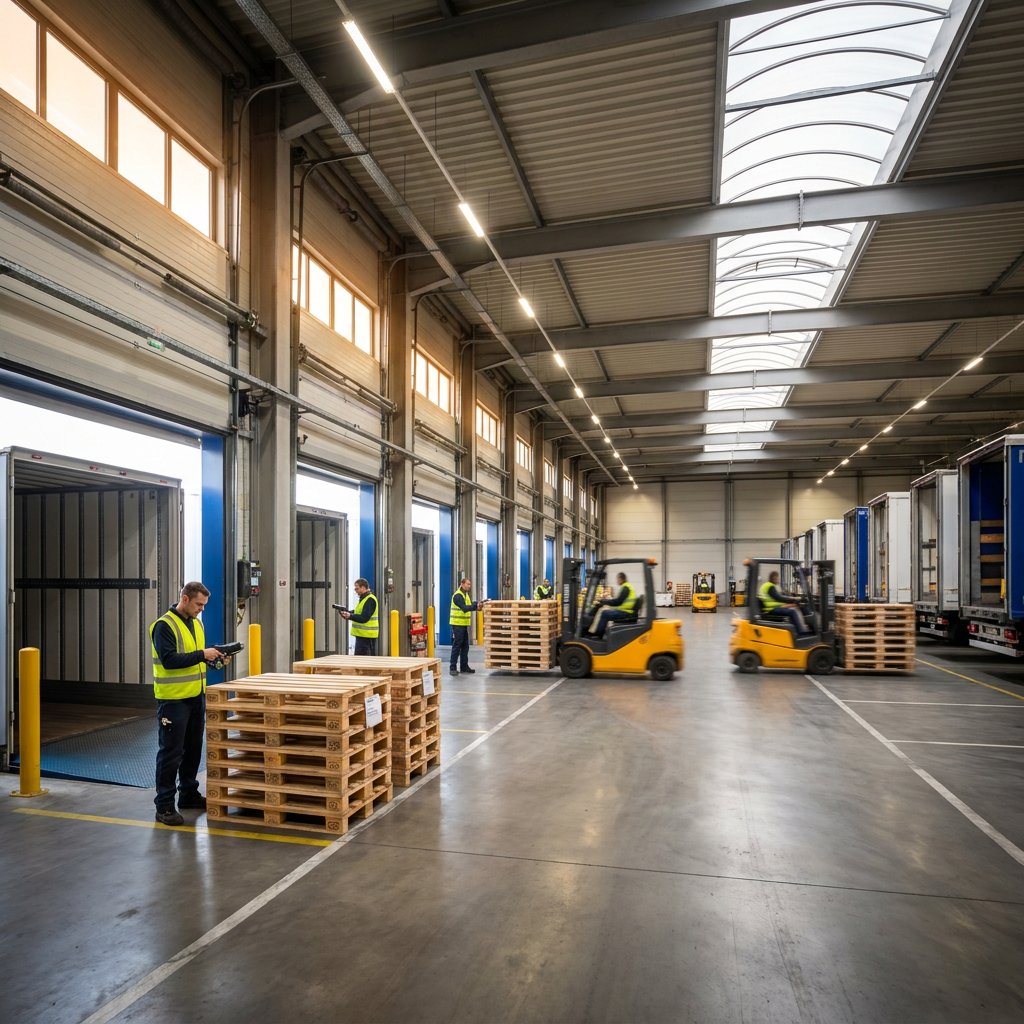
A cross docking warehouse is built for speed. Instead of holding goods in storage for days or weeks, inbound freight is received, sorted, consolidated, and moved quickly to outbound transport with little or no long-term storage. If you want to reduce dwell time, improve delivery flow, and cut unnecessary handling, cross docking can be a smart warehouse strategy.
For shippers, importers, distributors, and growing e-commerce operations, cross docking and warehouse systems can help create a faster and more responsive supply chain. It is especially useful when you deal with time-sensitive inventory, predictable order flows, retail replenishment, or freight that needs to move through a facility instead of sitting in stock.
What is cross-docking in a warehouse?
Cross-docking in warehouse management is the process of transferring inbound goods directly to outbound shipments with minimal storage time in between. A cross dock warehouse acts as a transfer point rather than a traditional storage location. Products arrive from suppliers, manufacturers, or ports, are checked and sorted, and then leave the facility for stores, customers, distribution points, or final-mile partners.
This model is different from standard warehousing and cross docking is often chosen when speed matters more than buffer stock. In a traditional warehouse, goods may be put away, stored, picked later, and shipped when needed. In a warehouse cross docking process, the goal is to keep inventory moving. That makes it attractive for high-volume, fast-turn products and shipments with clearly planned destinations.
How a warehouse cross docking process works
Although each operation is different, most cross docking warehouse services follow a similar flow. The exact setup depends on shipment volume, SKU complexity, carrier timing, and the level of system integration between suppliers, warehouse teams, and transport providers.
Typical process steps
- Inbound trucks or containers arrive at the facility
- Goods are unloaded and checked against shipment data
- Items are sorted by destination, route, customer, or order
- Freight may be relabeled, palletized, or consolidated
- Outbound loads are staged briefly at the dock
- Goods are loaded onto outbound vehicles for final distribution
Some operations handle full pallets only, while others include carton-level sorting, picking cross docking, or mixed-load consolidation. The shorter the dwell time, the more important timing, scanning accuracy, and dock coordination become.
What is an example of cross-docking logistics?
A simple example is an importer receiving multiple pallets of consumer goods at a cross docking facility and storage point near a port. Instead of moving all goods into long-term racking, the pallets are broken down and reassigned to separate outbound deliveries for different retail locations. The shipment may arrive in one container, but leave the cross dock and warehousing site as several route-ready loads.
Another common example is e-commerce parcel consolidation. Inbound products from multiple vendors arrive at a warehouse crossdock operation, are matched to open customer orders, and are shipped out the same day or within a very short window. This reduces storage demand and helps speed up fulfillment.
Main types of cross docking warehouse operations
Pre-distribution cross docking
In pre-distribution, the final destination of each shipment is already known before goods arrive at the warehouse. Labels, orders, routing data, and outbound planning are prepared in advance. This makes the operation more controlled and often faster, because the facility only needs to verify, sort, and dispatch.
Post-distribution cross docking
In post-distribution, the final allocation happens after the freight arrives. This gives you more flexibility when order demand changes late, but it also requires stronger warehouse management and better real-time visibility. If your sales channels move quickly, post-distribution can support a more adaptive outbound plan.
Continuous cross docking
Goods flow directly from receiving to shipping with almost no interruption. This is common when products are standardized, demand is steady, and delivery windows are tightly planned.
Consolidation cross docking
Multiple inbound shipments are combined into one outbound load. This approach helps improve truck utilization and can reduce transport costs, especially when smaller shipments from different suppliers are going to the same destination.
Deconsolidation cross docking
One larger inbound load is broken into smaller outbound shipments. This is useful for retail distribution, parcel networks, and regional replenishment programs where one supplier delivery feeds many destinations.
Cross docking vs traditional warehousing
The biggest difference between cross docking in warehouse management and traditional warehousing is the role of inventory. A conventional warehouse is designed to hold stock, create a buffer, and support later picking. A cross docking warehouse is designed to keep products moving through the building as quickly as possible.
Cross docking usually offers faster throughput and lower storage-related cost, but it is less forgiving when inbound trucks are delayed, order data is incomplete, or outbound schedules shift unexpectedly. Traditional warehousing is often better when you need reserve stock, seasonal planning, or protection against demand volatility.
Model | Best suited for | Main trade-off
|
|---|---|---|
Cross docking warehouse | Fast-moving freight, time-sensitive shipments, planned outbound flow | Requires tight coordination and accurate real-time data |
Traditional warehouse | Buffer inventory, seasonal stock, variable demand, longer storage cycles | Higher storage time and more handling steps |
Benefits of a cross dock warehouse
The main reason companies choose cross dock storage is simple: less waiting, less storage, and faster movement across the supply chain. When the operation is well planned, cross docking & warehouse services can improve both speed and control.
- Lower storage requirements because goods do not sit in inventory for long
- Faster order flow from inbound receipt to outbound dispatch
- Reduced handling touches compared with put-away and later picking
- Better transport efficiency through load consolidation
- Improved freshness for perishable or date-sensitive products
- More responsive replenishment for retail and e-commerce channels
It can also support cleaner inventory management. Because freight is moving quickly, teams can identify mismatches, routing problems, and late arrivals earlier in the process. For businesses trying to streamline warehousing and cross docking, that visibility matters just as much as pure speed.
Challenges and limits of cross docking
A cross docking warehouse is efficient, but only when the surrounding supply chain is disciplined. Unlike conventional warehousing, there is little room for delay or missing information. If one part of the chain fails, the whole flow can slow down.
Common challenges include mismatched inbound and outbound timing, dock congestion, incorrect labeling, poor ASN or shipment data, and sudden swings in order volume. Cross docking inventory management also becomes harder when products have different handling needs, compliance rules, or packaging formats. Temperature-sensitive goods, hazardous goods, and high-SKU mixed orders often need more process control.
This is why many companies treat cross docking as a selective strategy rather than a one-size-fits-all warehouse model. Some freight streams are ideal for a warehouse cross docking process, while others are better handled through storage and later fulfillment.
What is the difference between cross-docking and 3PL?
Cross-docking is a logistics method. A 3PL is a service provider. That means they are not direct alternatives. A third-party logistics provider may offer transport, customs support, warehousing, last-mile delivery, and sometimes cross docking & warehouse systems within the same service scope.
In practice, you can use a 3PL for traditional storage, for cross docking distribution, or for a hybrid model. The important question is not whether you need cross-docking or a 3PL, but whether your logistics partner can support the operating model your freight requires.
What is cross-docking vs distribution center?
A distribution center is a broader type of facility used to receive, store, pick, pack, and ship products. Cross-docking is a specific operating method that can happen inside a distribution center or in a dedicated cross dock warehouse. In other words, a distribution center is the facility type, while cross-docking is the process strategy.
Some distribution centers use cross docking for selected product lines, urgent replenishment, or promotional freight, while using standard storage for the rest. That hybrid approach is common when you want both speed and inventory flexibility.
Industries where cross docking warehouse services work well
Cross docking is most effective when products move quickly, order destinations are known, and storage adds little value. The following sectors often benefit from a cross docking facility and storage model with very short dwell times.
Retail and consumer goods
Retailers often use cross docking distribution to move high-turn products from suppliers to stores with minimal delay. This supports shelf availability and reduces the amount of reserve stock held at local sites.
Food and beverage
Fresh, chilled, and date-sensitive products benefit from shorter handling windows. The less time spent in storage, the better the chances of preserving product quality and meeting delivery timelines.
E-commerce
Fast-moving online sales can benefit from cross dock and warehousing models when inventory arrives from multiple vendors and needs to be routed quickly into fulfillment or final-mile networks.
Manufacturing and parts supply
For just-in-time production environments, cross-docking can keep components moving to the line without building excessive local inventory. This can reduce carrying cost while supporting production continuity.
Systems and technology behind cross docking
A successful operation depends heavily on information accuracy. Cross docking and warehouse systems need to connect inbound visibility, dock scheduling, order allocation, scanning, and outbound planning. Without that coordination, the speed advantage of cross docking disappears.
Core system requirements
- Real-time shipment visibility
- Barcode or scan-based receiving and routing
- Dock appointment and door planning
- Order and destination matching
- Exception handling for shortages, delays, and relabeling
- Transport coordination for outbound dispatch
How WMS supports cross docking
WMS cross docking functions help warehouse teams route inbound goods to the right outbound movement without putting stock away first. A cross docking WMS setup can trigger destination logic, staging rules, pallet transfers, and time-based priorities. When people search for terms like cross docking in Oracle WMS, D365 cross docking, cross docking SAP, or SAP transportation cross docking, they are usually looking for this operational system layer: how software enables fast flow with fewer manual decisions.
Cross docking inventory system logic is especially important when you need to control mixed pallets, partial order allocation, or exceptions. Even the best physical layout will struggle if the data flow is weak.
Best practices for a more efficient cross dock warehouse
The strongest cross docking operations are designed around simplicity, timing, and visibility. If you are evaluating warehousecrossdock workflows or planning a new cross dock storage setup, these practices usually deliver the biggest gains.
- Use clear dock scheduling to reduce congestion and waiting time
- Minimize travel distance between inbound and outbound doors
- Standardize labels, pallet rules, and scan points
- Separate fast-flow freight from exception freight
- Build contingency plans for delayed arrivals and incomplete loads
- Train teams for speed without sacrificing accuracy
- Track dwell time, misroutes, loading accuracy, and dock utilization
For many businesses, the best setup is not pure cross docking or pure storage. It is a mixed model where selected freight flows through quickly, while slower or less predictable inventory moves into standard warehousing. That balance often produces the strongest service performance.
When a cross docking warehouse makes sense for your business
You should consider a cross docking warehouse when your goods have predictable demand, short turnaround windows, and limited need for long-term storage. It also makes sense when transport consolidation can lower cost, or when customer expectations require faster replenishment.
It may be less suitable if your order profile changes constantly, your inbound deliveries are unreliable, or your products require frequent inspection, customization, or staged inventory availability. In those situations, a traditional warehouse or hybrid setup may perform better.
How Ocean Quest Logistics fits into this logistics model
Ocean Quest Logistics publicly positions itself around warehousing solutions, freight forwarding, customs brokerage, real-time shipment tracking, and end-to-end logistics support from booking to final delivery. While the company does not publicly present a dedicated cross docking warehouse service page at this time, the broader warehousing and transport model is directly related to the kind of fast-flow coordination that cross docking depends on.
If you are assessing whether cross dock and warehousing strategies fit your supply chain, the key starting point is operational design: shipment frequency, product profile, timing windows, visibility requirements, and outbound routing complexity. A logistics partner with warehousing support, shipment visibility, and transport coordination can help determine whether cross docking, storage, or a hybrid model is the better fit. For broader logistics insights or to contact our team, you can explore the next step based on your operation’s needs.
FAQ about cross docking warehouse operations
Is cross docking the same as storage?
No. Cross docking minimizes storage time. Goods usually move through the facility quickly instead of being stored as regular inventory.
Can cross docking reduce inventory carrying costs?
Yes, it can reduce carrying costs because products spend less time in stock. The actual savings depend on your order flow, transport planning, and handling efficiency.
Does cross docking work for every product type?
No. It works best for fast-moving, time-sensitive, or predictable freight. Products that need long-term storage, complex value-added handling, or large safety stock may be better suited to traditional warehousing.
What is cross dock storage?
Cross dock storage usually refers to very short staging time near inbound or outbound docks, not long-term warehouse storage. It is a temporary step in the transfer process.
Can cross docking be used with e-commerce?
Yes. It can be useful for high-velocity e-commerce flows, vendor consolidation, and fast outbound routing when demand data and order visibility are strong.
Do you need a WMS for cross docking?
A WMS is not always mandatory for simple flows, but most medium and large operations benefit from one. Cross docking warehouse systems improve routing accuracy, visibility, and exception handling.
Ready to move your next shipment?
Tell us what you're moving, where it needs to go and how often. We'll work out the right setup from there.