
Port congestion impact on supply chain
 Roeslan Ozdoyev6 min read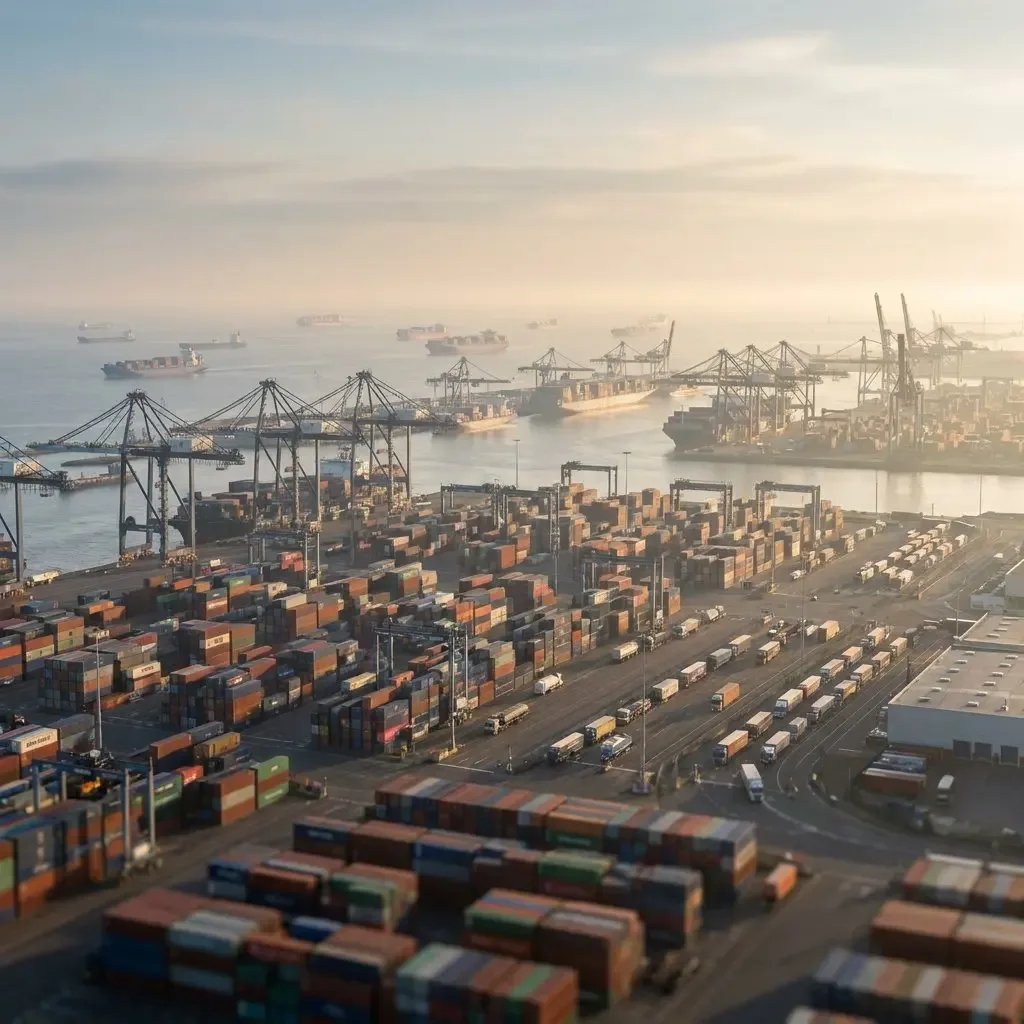
Port congestion can turn a planned ocean shipment into a wider supply chain disruption. When vessels wait for berths, containers remain at terminals longer, and inland collections miss their timing, the effect reaches inventory, customs, transport budgets and customer deliveries.
For importers and exporters in Belgium, the Netherlands and Luxembourg, the priority is not simply knowing that a port is busy. It is having clear shipment visibility, accurate documentation and coordinated action from booking through port-to-door delivery.
How port congestion disrupts the supply chain
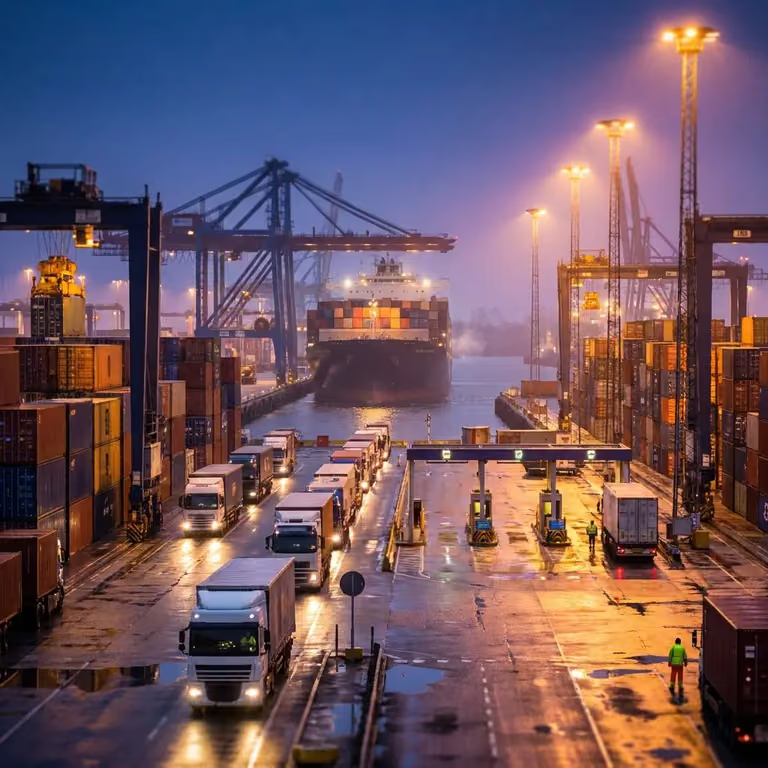
Port congestion occurs when a port, terminal or its surrounding transport network cannot process cargo at the pace it arrives. The bottleneck may be at anchorage, the quay, the container yard, customs, the truck gate or the inland rail and road connection.
A delay at one stage affects the next. A late vessel arrival can shift discharge dates, reduce time available for customs preparation, delay container collection and disrupt warehouse receiving slots or final delivery appointments. This makes lead times less predictable even when the original sailing schedule appeared reliable.
Longer transit and less reliable delivery planning
Vessel waiting time and slower terminal handling can add days to an ocean freight movement. The challenge is not only the additional transit time. Estimated arrival dates may change repeatedly, making it harder to plan production, warehouse labour, onward transport and customer commitments.
For time-sensitive goods, an uncertain arrival can be as disruptive as a clearly communicated delay. Teams may hold stock unnecessarily, reschedule deliveries several times or use more expensive contingency transport to protect a critical order.
Pressure on inventory and warehousing
When imported goods are delayed at port, businesses can face stockouts, interrupted production or missed sales opportunities. To compensate, some companies hold more safety stock. That can improve resilience, but it also ties up working capital and increases warehousing costs.
Congestion can create the opposite issue as well: containers that arrive but cannot be collected promptly may cause receiving plans to become compressed. Warehouses then need to manage sudden volume peaks rather than a steady inbound flow.
Higher freight and terminal-related costs
Congested ports can increase the total cost of moving cargo. Carriers may face longer vessel rotations and capacity constraints, which can affect ocean freight charges and schedule availability. On the cargo side, delayed collection or clearance may expose importers to terminal storage and demurrage and detention costs, depending on the applicable carrier and terminal terms.
These costs are often avoidable only when each handoff is ready: shipping documents are complete, customs data is accurate, cargo release is arranged and collection can be scheduled as soon as the container becomes available.
Customs and documentation delays become more costly
Port congestion does not automatically cause a customs delay, but it leaves less room for errors. Missing commercial documents, incorrect commodity data, inconsistent declared values or an unresolved customs query can keep cargo in the terminal longer while capacity is already under pressure.
Accurate customs preparation and document checks help avoid customs delays. They cannot remove a port-wide queue, but they prevent administrative issues from extending the disruption once the shipment is ready for clearance.
Impact on customers and internal teams
Late or uncertain deliveries affect customer service, sales forecasts and internal coordination. Procurement, logistics, finance, warehouse teams and customers may all need updated information. Without a current shipment status and a clear owner for next steps, staff spend valuable time chasing carriers, terminals and transport providers instead of managing the exception.
What causes port congestion?
Congestion is usually the result of several pressures occurring together rather than a single event. Common causes include high import volumes, seasonal peaks, limited berth or yard capacity, vessel schedule bunching, labour shortages, severe weather, industrial action and disruption to road or rail links from the port.
Large vessels can intensify the issue because they discharge high volumes within a short period. Customs inspections, delayed cargo release and containers remaining in the terminal beyond their planned dwell time can also reduce available yard space. For shippers, the practical lesson is to manage the whole chain around the port, not only the ocean leg.
Practical ways to limit the impact of port congestion
Businesses cannot control terminal capacity or vessel queues, but they can reduce their exposure to avoidable delay, cost and uncertainty.
- Plan earlier for critical shipments. Build realistic lead-time buffers for high-priority goods and allow for possible schedule changes around known peak periods.
- Prepare documents before arrival. Ensure commercial invoices, packing lists, transport documents, commodity details and customs information are complete and consistent before cargo reaches the port.
- Track milestone changes closely. Monitor vessel departure, arrival, discharge, cargo availability, customs status and collection progress so that delays are identified early.
- Coordinate collection and delivery in advance. Align customs brokerage, terminal release, trucking, warehouse receiving capacity and final delivery requirements to reduce dwell time once cargo is available.
- Review inventory exposure. Identify products where a delayed container would stop production, create a stockout or affect a key customer, then set proportionate safety-stock or replenishment plans.
- Communicate revised expectations quickly. Give internal stakeholders and customers realistic delivery updates based on current milestones rather than outdated planned dates.
Use visibility to manage exceptions, not just report them
Shipment tracking is most valuable when it supports a decision. A current location alone does not solve congestion, but visibility across shipment milestones helps teams understand what has changed and what needs to happen next.
For example, if an arrival is delayed, the receiving plan may need to move. If cargo has discharged but is awaiting clearance, the documentation and customs status should be checked. If cargo is available for collection, the inland delivery handoff should be ready. Clear ownership across these steps reduces the communication gaps that turn a port delay into a longer supply chain failure.
Coordinated ocean freight support for BENELUX shipments
Ocean Quest Logistics coordinates ocean freight, carrier communication, planning and scheduling for international shipments. We also provide real-time shipment tracking, customs brokerage and port-to-door last-mile delivery coordination, helping importers and exporters maintain a clearer view of cargo as it moves through key milestones.
While no forwarder can eliminate port-wide congestion, coordinated freight, documentation, customs and delivery preparation can reduce avoidable delays after a disruption occurs. If your business needs 3PL logistics support for an upcoming import or export shipment, request a quote or logistics plan from our team.
Frequently asked questions
How does port congestion affect freight costs?
Congestion can contribute to higher ocean freight costs when vessel schedules, capacity and rotations are disrupted. It can also create additional cargo-side costs, such as storage, demurrage or detention, if containers cannot be cleared or collected within the applicable free time.
What is the difference between port congestion and a delayed vessel?
A delayed vessel can result from weather, schedule changes, mechanical issues or route disruption. Port congestion is specifically a capacity or flow problem at or around the port, such as waiting for a berth, slow terminal processing, yard pressure or delayed container evacuation. A delayed vessel may lead to congestion, and congestion may further delay a vessel.
How can importers reduce demurrage and detention risk during congestion?
Start customs and documentation preparation early, monitor cargo availability and release status, confirm collection readiness and coordinate inland delivery before the container is available. Charges depend on carrier, terminal and transport terms, so it is important to understand the applicable free-time conditions for each shipment.
Which shipment milestones should be monitored during a congested port call?
Monitor revised vessel arrival, berth status where available, discharge completion, container availability, customs clearance or release status, terminal pickup readiness, container collection and final delivery. These milestones show whether the delay is still at sea, inside the terminal or in the inland handoff.
Ready to move your next shipment?
Tell us what you're moving, where it needs to go and how often. We'll work out the right setup from there.