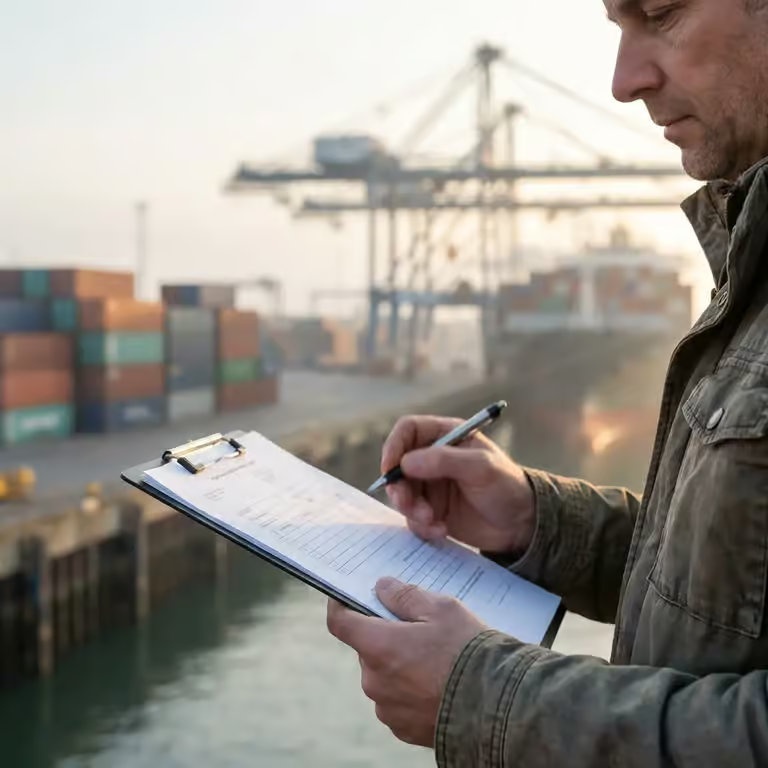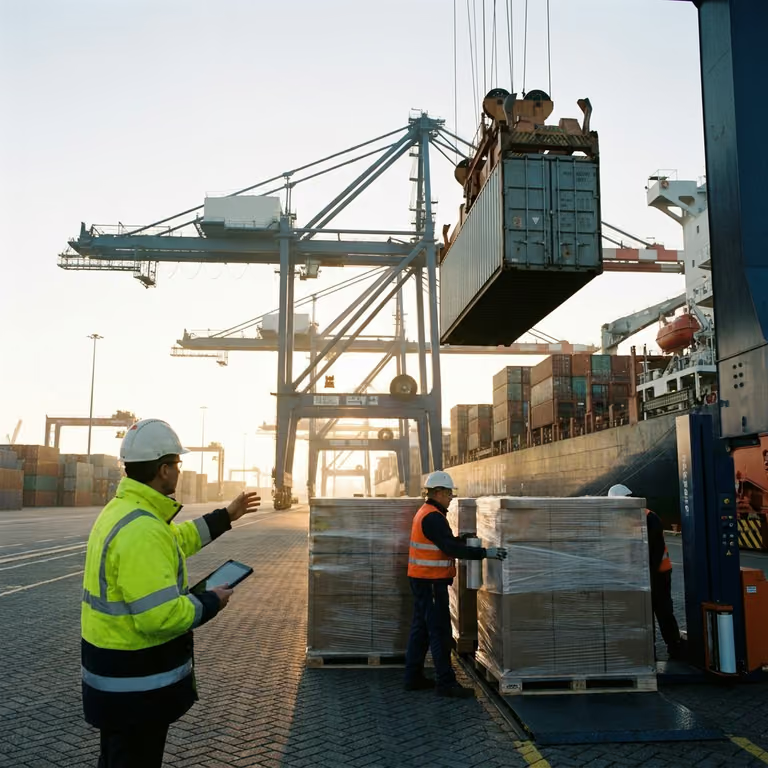

Customs clearance documents
 Roeslan Ozdoyev5 min read
Complete, consistent customs clearance documents help keep international shipments moving and reduce the risk of holds, extra storage costs and unexpected questions at the border. Whether you import goods into Belgium, the Netherlands or Luxembourg, the exact paperwork depends on the goods, origin, shipment value and customs procedure.
Use this guide to understand the core documents commonly required for customs clearance and what to check before your cargo departs.
What are customs clearance documents?
Customs clearance documents are the commercial, transport and regulatory records used to identify a shipment, determine its customs treatment and support the import or export declaration. Customs authorities use them to assess commodity classification, customs value, origin, applicable duties and VAT, and any restrictions on the goods.
The documents must describe the same shipment. Differences in quantities, weights, product descriptions, values or consignee details can delay clearance while the information is checked or corrected.
Documents commonly needed for customs clearance
Not every shipment requires the same paperwork, but the following documents form the core of most import and export clearance files.
Document | Purpose in customs clearance |
|---|---|
Commercial invoice | Shows the seller, buyer, goods, price, currency, delivery terms and transaction details used to support customs valuation. |
Packing list | Breaks down the shipment by package, including quantities, net and gross weight, dimensions and contents. |
Transport document | Provides shipment and carriage details. This may be a bill of lading for ocean freight or an air waybill for air freight. |
Customs declaration | Formally declares the goods to customs under the relevant import, export, transit or other customs procedure. |
EORI number | Identifies the economic operator dealing with EU customs. It is generally required for businesses making customs declarations in the EU. |
Proof of origin | May support a preferential duty rate under a trade agreement or establish the non-preferential origin of the goods. |
Licences, permits or certificates | May be required for regulated, controlled or restricted goods, such as certain food products, plants, chemicals, medical goods or dual-use items. |
The commercial invoice: the key customs document
The commercial invoice is often the most important supporting document because it provides the transaction details behind the declared customs value. A vague invoice can lead to questions, valuation adjustments or a shipment hold.
A clear commercial invoice should normally include:
- Seller and buyer names, addresses and contact details
- Invoice number and date
- A specific description of each product
- Quantity, unit price, total value and currency
- Country of origin for the goods where relevant
- HS commodity code where available and verified
- How Incoterms affect customs clearance, including the applicable rule and named place
- Freight, insurance, discounts, assists or other costs when relevant to customs value
Descriptions such as “parts,” “samples” or “general merchandise” are usually not specific enough on their own. Describe what the goods are, what they are made of and, where useful, what they are used for.
Supporting documents that must match
The packing list and transport document support the information on the commercial invoice and declaration. They should align on the shipper, consignee, package count, goods description and shipment reference.
Check weights carefully. Customs, carriers, terminals and warehouses may work from different records, and inconsistencies can create avoidable operational queries. For containerised cargo, ensure shipping instructions, bill of lading details and cargo documents use the correct legal entity names and addresses.
When additional permits or certificates are required
Some goods cannot be cleared on the basis of standard commercial and transport documents alone. Depending on the commodity, origin and destination, authorities may require evidence of compliance before release.
Examples can include veterinary or phytosanitary documents, health certificates, product conformity documentation, import licences, quota documentation or controlled-goods authorisations. Requirements can change based on the HS code, intended use and country of origin, so confirm them before shipping rather than when the goods have already arrived.
How the import customs clearance procedure works
- The shipment documents are prepared by the seller, shipper and carrier.
- Goods arrive at the port, airport or border location and are presented to customs.
- A customs declaration is submitted using the shipment data and supporting documents.
- Customs may accept the declaration, request further information, inspect the goods or require additional compliance documents.
- Import duties, VAT and other applicable charges are assessed according to the declaration and customs procedure.
- Once customs releases the goods, they can continue to their next destination, subject to any transport or terminal requirements.
Release is not automatic simply because documents have been submitted. Customs may still review the declaration, request clarification or select cargo for inspection.
Checks to make before cargo ships
- Confirm the importer of record and EORI number.
- Use an accurate product description and correct HS classification.
- Make sure declared values are supported by the commercial transaction.
- Check that invoice, packing list and transport document show matching shipment details.
- Establish whether origin evidence, licences or certificates are needed.
- Share final documents early enough for customs and freight planning.
- Keep copies of the final declaration and supporting records for your compliance files.
For businesses moving cargo through Antwerp and the wider BENELUX region, early document checks can help avoid customs delays once freight reaches the port or airport. Ocean Quest Logistics offers customs brokerage services as part of its international freight coordination services. Contact our team to discuss your shipment and customs clearance requirements.
Frequently asked questions
What documents are needed for customs clearance?
Most shipments require a commercial invoice, packing list, transport document, customs declaration and the importer’s EORI number. Depending on the goods and trade lane, proof of origin, permits, licences or product certificates may also be required. Requirements can differ between import and export customs clearance requirements.
How do I get customs clearance documents?
The seller or shipper generally provides commercial documents such as the invoice and packing list. The carrier issues the transport document. Regulatory documents are obtained from the relevant authorised body where required, while the customs declaration is submitted by the responsible declarant using the shipment information.
What does “customs clearance documents submitted” mean?
It means the required information or supporting documents have been sent to customs, a customs representative or the carrier’s clearance team for processing. It does not necessarily mean the cargo has been released. Further checks, duty and VAT payment, or an inspection may still be required.
Is there a customs clearance certificate?
There is no single universal customs clearance certificate for every shipment. After a declaration is processed, the relevant customs system or representative may provide release information, an entry reference or other evidence of clearance. The exact record depends on the country, procedure and shipment type.
Ready to move your next shipment?
Tell us what you're moving, where it needs to go and how often. We'll work out the right setup from there.