
Import vs Export Customs Clearance
 Roeslan Ozdoyev10 min read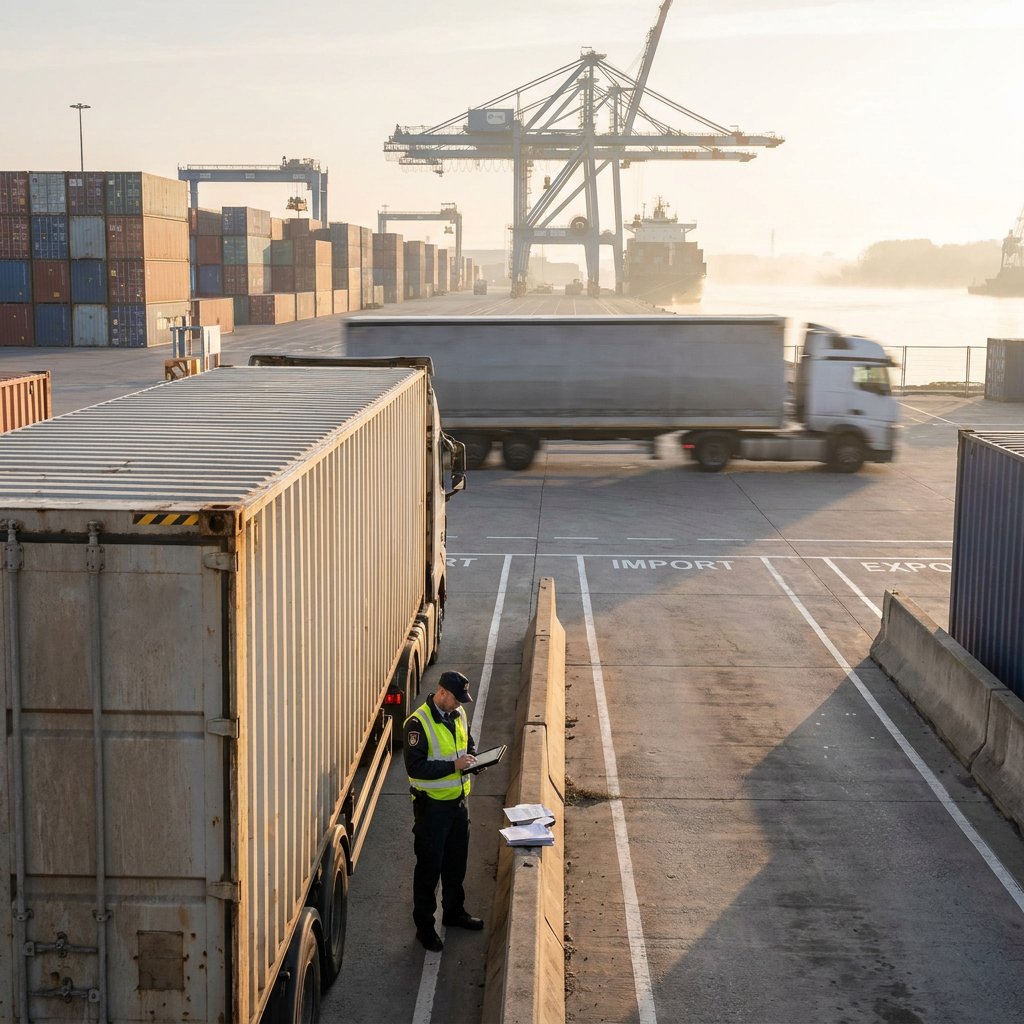
Import and export customs clearance are often grouped together, but they are not the same process. If you ship goods internationally, the difference matters because each side of the movement has its own documents, checks, risks, taxes, and release requirements. Understanding how import customs clearance works versus export customs clearance helps you avoid delays, unexpected charges, rejected declarations, and supply chain disruption.
In simple terms, export customs clearance is the process of legally clearing goods out of the country of origin, while import customs clearance is the process of legally clearing those goods into the destination country. One focuses on outbound compliance, the other on inbound duties, taxes, and release. If you manage international freight, this distinction affects lead times, landed cost, document preparation, and who is responsible at each step.
What is the difference between import and export customs clearance?
The main difference between import and export customs clearance is the direction of the shipment and the authority controlling that stage of the move.
Export customs clearance happens before goods leave the origin country. It usually involves submitting export data, checking whether goods are restricted, validating classification and value, and confirming that the shipment can legally depart. Depending on the product and destination, export control rules, licensing requirements, and embargo screening may apply.
Import customs clearance happens when goods arrive in the destination country. This stage focuses on admitting the goods into that market. Customs authorities review the declaration, verify the customs value, assess duties and taxes, and may request supporting documents or inspection before release.
So when people ask, "What is the difference between import and export clearance?" the short answer is this: export clearance gets cargo out, import clearance gets cargo in.
How export customs clearance works
Export customs clearance is the compliance process that allows goods to leave the exporting country legally. It typically starts before the cargo physically departs, because authorities and logistics partners need accurate shipment data in advance.
The exporter or its customs representative prepares the export declaration using commercial shipment details such as product description, quantity, value, origin, destination, and commodity classification. Customs may also require proof that the goods are not subject to prohibition, sanctions, dual-use restrictions, or licensing controls.
Once the declaration is accepted, customs can clear the shipment, request corrections, or select it for document review or inspection. Only after that process is completed can the goods move forward for international transport by air, ocean, road, or rail.
Key objectives of export clearance
- Confirm the goods can legally leave the country
- Check export declaration accuracy
- Apply export control and restriction rules
- Create an official record of the outbound shipment
- Support tax or VAT treatment where applicable
Common export clearance requirements
- Accurate exporter and consignee details
- Correct HS or tariff classification
- Commercial invoice data
- Transport document references
- Licenses or certificates for controlled goods
- Origin information where required
How import customs clearance works
Import customs clearance begins when the shipment reaches the destination country or when import data is pre-filed ahead of arrival. At this stage, customs wants to determine what the goods are, what they are worth, whether they are compliant, and what duties or taxes must be paid before release.
The importer or customs broker files the import declaration and submits the supporting documents. Customs then reviews the shipment data, checks the tariff classification, customs value, country of origin, and any import restrictions. If everything is correct, the shipment may be released quickly. If something is unclear, customs may place the cargo on hold for further review, request more documents, or order a physical inspection.
This is why import customs clearance often has the most direct impact on delivery timing and landed cost. It is also the stage people usually mean when they ask whether their package is already in the country.
Key objectives of import clearance
- Validate the inbound shipment for legal entry
- Assess duties, taxes, and other charges
- Check compliance with local import rules
- Identify prohibited or restricted goods
- Authorize release into the domestic market or customs procedure
Does import customs clearance mean your package is in your country?
Usually, yes, but not always in the final delivery sense. Import customs clearance normally means the shipment has reached the destination country or is under the destination customs authority's control. It does not mean the package is already out for delivery. After customs release, the cargo may still need terminal handling, deconsolidation, linehaul transfer, sorting, or last-mile delivery before it reaches you.
Import vs export customs clearance at a glance
Aspect | Export Customs Clearance | Import Customs Clearance
|
|---|---|---|
When it happens | Before goods leave the origin country | When goods enter the destination country |
Main purpose | Authorize legal departure | Authorize legal entry and release |
Main focus | Export compliance, restrictions, declaration accuracy | Duties, taxes, valuation, import compliance |
Who is usually responsible | Exporter or export broker | Importer or import broker |
Typical risk areas | Restricted goods, missing licenses, wrong export data | Underpayment of duties, document mismatch, inspection holds |
Operational impact | Missed departure or loading delay | Arrival hold, storage, demurrage, delivery delay |
Documents used in both import and export customs clearance
Most customs issues come back to documentation. The exact document set depends on the shipment, mode of transport, product type, origin, destination, and trade terms, but a few documents appear again and again in both import and export clearance.
Commercial invoice
The commercial invoice is one of the most important customs documents. It identifies the seller, buyer, goods, value, currency, and sale terms. Customs uses it to assess value, confirm transaction details, and compare the declaration with the shipment itself.
Packing list
The packing list explains how the goods are physically packed. It helps customs and carriers verify carton count, pallet count, weights, dimensions, and contents. It becomes especially useful during inspections or when cargo is split across multiple handling units.
Transport documents
Depending on the mode, this may be a bill of lading, air waybill, or road consignment note. These documents connect the customs file to the physical movement of the goods and show routing, parties involved, and shipment references.
Customs declaration
The customs declaration is the formal filing submitted to customs. It contains the key compliance and fiscal data used to clear the shipment. If the declaration is inaccurate, customs release may be delayed even if every other document is available.
Certificates, permits, and licenses
Some goods need additional documents, such as certificates of origin, health documents, phytosanitary certificates, product conformity records, or import or export licenses. These are common in regulated or controlled product categories.
Why customs clearance delays happen
Whether you are dealing with import customs clearance or export customs clearance, delays usually come from a short list of preventable issues. Customs does not hold cargo randomly in most cases. There is usually a trigger, such as inconsistent data, missing documents, an unusual valuation, a classification problem, or a compliance flag.
Frequent causes of clearance delays
- Incorrect or incomplete commercial invoice details
- Mismatch between invoice, packing list, and transport data
- Wrong HS code or tariff classification
- Missing permits, licenses, or origin documents
- Incorrect customs value declaration
- Late filing of shipment data
- Random or risk-based customs inspection
- Restricted or sensitive goods requiring extra review
How long after export customs clearance?
There is no single answer because the timing depends on transport mode, route, carrier schedule, transshipment, and destination import processing. Export customs clearance only means the shipment has been cleared to leave the origin country. After that, the cargo still needs to depart, travel internationally, arrive, and complete import customs clearance in the destination country. For that reason, export clearance is an important milestone, but not the final one before delivery.
Customs channels and inspections
Many customs systems use risk-based controls to decide how closely a shipment should be reviewed. While terminology varies by country, the basic logic is similar: some shipments are released quickly, some get a document check, and others are selected for physical inspection.
Green channel
A green channel usually means the declaration has passed automated or preliminary checks and the shipment can move with minimal intervention. This is the best-case scenario for both speed and predictability.
Orange or yellow channel
This generally means customs wants a documentary review. The shipment may not be physically opened, but customs can request clarification on value, classification, origin, licensing, or consignee details.
Red channel
A red channel usually means physical inspection or a more intensive review. This can add time, handling cost, and coordination between customs, the terminal, and the declarant. If the documentation is clean and the goods match the declaration, release can still happen smoothly after inspection.
Common mistakes in import and export clearance
The biggest customs problems are rarely dramatic. More often, they are small data errors that create larger operational consequences. A wrong item description, missing origin statement, or inconsistent quantity can be enough to stop a shipment at the border.
Using vague product descriptions
Descriptions like "parts," "samples," or "accessories" are too vague for customs in many situations. The goods should be described in a way that supports proper classification and review.
Declaring the wrong value
If the customs value is understated, overstated, or incomplete, you can face reassessment, penalties, or release delays. Value should reflect the transaction and any additions required by customs rules.
Choosing the wrong procedure
Not every shipment should move under the same customs procedure. Temporary imports, transit, warehousing, and standard release each have different consequences. Using the wrong one can create avoidable cost and compliance risk.
Assuming import and export data can be reused without review
Some shipment details carry over from export to import, but not everything is interpreted the same way by each customs authority. Destination requirements may differ, especially for valuation, product controls, and tax treatment.
How to reduce customs risk before the shipment moves
The best way to speed up customs clearance is to solve problems before customs sees the file. Pre-shipment checks are often the difference between a routine release and an expensive delay.
Practical steps that help
- Validate classification before booking the shipment
- Check whether the goods need import or export licenses
- Make sure invoice, packing list, and transport details match exactly
- Confirm who acts as importer and exporter of record
- Review Incoterms so responsibility for duties and clearance is clear
- Submit customs data early when pre-filing is possible
- Keep a single document set with version control
When a customs broker adds value
If you ship internationally on a regular basis, customs brokerage can reduce both friction and risk. A broker helps prepare and submit declarations, review supporting documents, monitor holds, and resolve issues before they become storage charges, missed departures, or customer delivery failures.
For businesses, the biggest advantage is not just form filing. It is process control. A good customs partner helps you maintain consistency across shipments, improve data quality, and reduce surprises tied to duties, inspections, and compliance exceptions. Readers looking for broader guidance can explore the customs and trade blog.
Ocean Quest Logistics offers customs brokerage as part of a broader logistics service, with a focus on getting goods through customs without delays, fines, or surprises. For companies moving freight across borders, having customs support connected to transport planning, tracking, and direct expert communication can make clearance more predictable from origin to delivery. If you need help with import or export customs clearance, contact our team.
FAQ about import vs export customs clearance
What is import customs clearance?
Import customs clearance is the process of declaring incoming goods to the destination country's customs authority so the shipment can be assessed, approved, and released into the market or another customs procedure.
What is export customs clearance?
Export customs clearance is the process of declaring goods before they leave the origin country and confirming they can legally be exported under the applicable rules and controls.
What is the difference between import and export?
Import means bringing goods into a country. Export means sending goods out of a country. In customs terms, each direction has its own declaration process, legal checks, and release conditions.
Does customs clearance happen twice on one international shipment?
Often, yes. One clearance can happen on export in the origin country, and another on import in the destination country. The exact process depends on the route, trade setup, and whether the shipment moves under any special customs procedure.
Can a shipment clear export customs but still be delayed later?
Yes. Export clearance only confirms the goods can leave the origin country. Delays can still happen during transport, transshipment, terminal handling, or import customs clearance at destination.
Who is responsible for import customs clearance?
Usually the importer of record is responsible, either directly or through a customs broker. Responsibility can also depend on the agreed Incoterms and local customs rules.
Who is responsible for export customs clearance?
Usually the exporter or shipper is responsible, often working with a freight forwarder or customs representative to prepare and file the export declaration.
How can you avoid customs clearance delays?
You reduce delays by using accurate documents, correct classification, realistic customs values, early filing, and a clear review process before cargo departs or arrives.
Ready to move your next shipment?
Tell us what you're moving, where it needs to go and how often. We'll work out the right setup from there.