
Rail freight
Rail freight is one of the most practical ways to move containerised, heavy or recurring cargo over medium and long distances. When the route, timing and cargo profile are right, shipping by rail can improve cost control, reduce road dependence and create a more stable flow between ports, inland terminals and final delivery points.
Clear pricing
You know what you're paying before you commit.
You can see everything
Your shipment, documents and key updates stay visible in one place.
Someone who knows your business
You always know who to call.
In detail
Rail freight
Move goods by rail with precise intermodal planning, customs support and real-time visibility. Request a rail freight quote today.
-1.webp)
Rail freight is one of the most practical ways to move containerised, heavy or recurring cargo over medium and long distances. When the route, timing and cargo profile are right, shipping by rail can improve cost control, reduce road dependence and create a more stable flow between ports, inland terminals and final delivery points.
Ocean Quest Logistics coordinates rail freight transport as part of our precise, end-to-end freight forwarding services. We help you plan the route, manage bookings, align customs and documentation, and maintain visibility from pickup to delivery. If you want rail logistics that feel organised instead of reactive, we can build the right solution around your shipment.
A practical option for predictable cargo flows
Rail freight, also called rail cargo, train freight or railway goods transport, means moving commercial goods by train instead of relying only on road haulage. In practice, most business shipments move through an intermodal setup. A truck collects the cargo or container, the rail leg handles the longer distance, and a final truck completes delivery. This approach combines the reach of road transport with the efficiency of rail for the line-haul section.
For many businesses, the value of rail is not just transport mode choice. It is operational control. Rail works best when you need a structured schedule, steady capacity for repeat volumes, and a better balance between cost, transit stability and sustainability. When the shipment is planned properly, rail freight transport can reduce avoidable handoff issues and make supply chain coordination easier.
When rail freight is the right fit
Rail is often a strong fit for container moves, palletised cargo, industrial goods, raw materials, consumer products moving in regular volumes, and freight that does not need same-day delivery. It is especially useful when cargo moves between major ports, inland terminals and industrial regions with established rail connections. Businesses shipping full containers by rail or moving repeat volumes on the same corridor usually benefit the most.
It is not always the best choice for very small shipments, highly urgent freight, or cargo going to locations far from a suitable terminal. In those cases, road or air may be more practical. The right decision depends on your shipment size, required delivery window, loading requirements, customs setup and how the first mile and final mile will be handled.
Cargo profiles that work well by rail
Good candidates for rail freight include standard containers, temperature-sensitive cargo in approved equipment, heavy goods that become expensive to move entirely by truck, and shipments where schedule consistency matters more than maximum speed. Intermodal rail freight is also a useful option when you want to move port-related imports or exports inland without adding unnecessary road miles.
How intermodal rail freight works
Intermodal rail shipping means one shipment moves under coordinated control while using more than one transport mode, which is central to understanding intermodal vs. multimodal transport. A common example is shipping containers by rail for the main journey, with trucking used at origin and destination. This is how many modern rail logistics services operate because rail rarely begins or ends directly at your warehouse door.
First mile pickup and terminal delivery
The process starts with cargo collection from your supplier, factory, warehouse or port. If the goods are moving in a container, we coordinate the right equipment type, pickup timing and transport instructions. The container or cargo is then delivered to the rail terminal within the required cutoff. This stage matters because missed cutoffs, incomplete documents or poor handover planning can delay the entire movement before the train even departs.
The main rail leg
Once checked in, the shipment moves on the rail network to the destination terminal or inland hub. During this stage, rail can provide a stable line-haul solution for longer distances, especially where road congestion, driver availability or cross-border trucking pressure make all-road transport less attractive. For suitable lanes, container transport by rail can create a more predictable middle leg than road alone.
Final delivery and milestone visibility
At destination, the cargo is discharged at the terminal and transferred to a truck for final delivery. Customs clearance may take place before departure, at border points, at the inland terminal or near final arrival, depending on the trade lane. Throughout the process, good coordination is essential. Ocean Quest Logistics keeps rail freight shipping organised with milestone tracking, documentation checks and direct support so you are not left chasing multiple parties for updates.
.webp)
Rail freight or road freight?
Rail and road are not direct replacements in every case. They solve different problems. Road offers maximum flexibility, direct door-to-door reach and better suitability for urgent or smaller consignments. Rail offers stronger efficiency for heavier loads, containerised cargo and recurring lanes where a scheduled long-distance leg can improve overall transport economics.
Most businesses should compare total solution value, not just the rate for one leg. A rail option may include terminal handling, truck drayage and longer planning lead times, but it can still be the better decision if it lowers long-haul trucking exposure, supports regular volumes and reduces pressure on tight delivery networks. For many supply chains, the best answer is not rail instead of truck. It is rail plus truck in the right combination.
What shapes rail freight costs
Rail freight costs depend on more than distance. The main price drivers usually include origin and destination, access to suitable rail terminals, shipment weight and volume, container type, commodity, required equipment, customs formalities and the road transport needed at both ends. A rail freight quote also depends on whether the move is a one-off shipment or part of a repeat lane with more stable planning.
Terminal handling charges, fuel-related surcharges, security fees, storage exposure, waiting time, and customs inspections can all affect the final cost. If the shipment needs special permits, temperature control, dangerous goods handling or non-standard loading arrangements, those factors also influence pricing. For UK or other cross-border cargo, duties, VAT, declaration requirements and border procedures can add time and cost if not prepared correctly.
The most expensive rail move is often not the one with the highest base rate. It is the one with poor coordination. Documentation errors, wrong commodity descriptions, missed terminal cutoffs or unplanned storage can quickly remove any saving. That is why accurate shipment data and disciplined execution matter as much as the transport rate itself.
Transit times, reliability and risk control
Rail freight transit times depend on the route, terminal schedules, service frequency, border conditions and the amount of road transport built into the move. A direct road truck can be faster on some lanes. On other lanes, a well-planned rail service offers better consistency, especially for repeat cargo that fits established train schedules.
Reliability in rail transport starts before departure. Booking lead time, cutoff management, equipment availability, correct customs setup and realistic delivery planning all affect the result. Delays can still happen because of network congestion, terminal pressure, infrastructure works, weather disruption or customs holds. The practical way to reduce risk is to manage the shipment proactively, keep documents accurate and maintain visibility across every handoff. That is where a structured freight forwarder adds value.
.webp)
Documentation, customs and compliance
Rail freight still depends on clean paperwork. The exact requirements vary by route and cargo, but common documents include the commercial invoice, packing list, shipper and consignee details, loading instructions, transport references and any carrier or terminal-specific paperwork. If the shipment crosses a customs border, import or export declarations may also be needed, together with accurate commodity descriptions, HS classification, values, origin details and any applicable permits or certificates.
For regulated goods, the compliance burden can be higher. Dangerous goods, controlled products, dual-use items, sanitary or phytosanitary products, and other restricted cargo may require additional approvals, labels or transport conditions. Errors in classification or declared value can lead to delays, duty corrections, fines or delivery holds. Carrier, terminal and transport terms also matter because they affect liability, deadlines and charges.
Ocean Quest Logistics supports rail cargo planning with a compliance-focused approach. We help align shipment data, customs requirements and operational timing so your cargo moves with fewer surprises. We also treat shipment information and documents with appropriate data-handling care as part of a modern forwarding process.
Rail freight from Antwerp and across Europe
Antwerp is a strong location for multimodal transport services because it connects seaport activity, inland distribution and cross-border transport corridors. For importers and exporters in Belgium and the wider BENELUX region, rail can be a useful part of a wider logistics strategy that includes ocean freight, road delivery, customs brokerage, warehousing and 3PL logistics support.
Ocean Quest Logistics coordinates rail shipping from Antwerp and surrounding logistics areas as part of a broader freight solution. That means we do not look at the rail leg in isolation. We look at pickup, terminal planning, customs timing, storage needs, final delivery and communication flow. If a rail option does not improve the overall movement, we will say so. If it does, we will structure it clearly and execute it with control.
Why businesses choose Ocean Quest Logistics for rail shipping
Many companies do not struggle with finding a transport mode. They struggle with poor coordination around it. Missed updates, lost documents, unclear ownership and reactive problem solving create more disruption than the line-haul choice itself. Our rail freight service is built to reduce that friction.
We combine practical forwarding expertise with real-time visibility, structured shipment checks and dedicated human support. You get one accountable logistics partner coordinating the booking, documentation, customs alignment, milestone tracking and final delivery plan. Instead of spending your time managing carriers, terminals and handoffs, you get a rail logistics process designed to stay clear, controlled and actionable from start to finish.
If you need a rail freight quote, we can assess your cargo, lane, timing and compliance needs and recommend the most suitable setup.
Frequently asked questions about rail freight
What is rail freight?
Rail freight is the commercial transport of goods by train. You may also see it called rail cargo, train freight or railway goods transport. In modern supply chains, it is often part of an intermodal movement where trucks handle pickup and final delivery while the train covers the main distance between terminals.
What is the difference between rail freight and intermodal rail freight?
Rail freight is the broad term for moving goods by rail. Intermodal rail freight is a specific setup where the shipment uses rail together with another mode, usually truck. For example, a container can be picked up by truck, moved long distance by train and then delivered by truck at destination. This is one of the most common forms of shipping by rail for businesses.
Can I ship containers by rail?
Yes. Shipping containers by rail is one of the most common rail cargo services. Standard containers can move efficiently between ports, inland terminals and major distribution areas. The main question is not whether containers can move by train, but whether the route, volume, timing and final delivery plan make rail the best option for your shipment.
Is rail freight cheaper than road transport?
Sometimes, but not always. Rail can be cost-effective for longer distances, heavier cargo and repeat lanes, especially when full containers or larger volumes are involved. Road can be cheaper or more practical for short distances, urgent cargo or locations far from terminals. The right comparison is total landed transport cost, including trucking, terminal handling, customs, storage risk and delivery timing.
How do I get a rail freight quote?
To prepare an accurate rail freight quote, we need the pickup and delivery locations, cargo type, weight, dimensions, packaging details, preferred timing, customs status and whether the goods move in containers or other equipment. If there are permits, dangerous goods requirements or special handling needs, those should be shared at the start. Good data leads to a more accurate routing and fewer surprises later.
Do I need customs documents for rail freight?
If the shipment crosses a customs border, yes. Rail freight does not remove customs obligations. You may need import or export declarations, correct HS codes, invoice values, origin information, permits and any regulated-goods documentation required for the cargo. Even within simpler trade environments, terminal and carrier documents still need to be correct to avoid holds and delays.
Should I book directly with rail freight companies or use a forwarder?
That depends on your internal capacity and the complexity of the move. Booking directly with a rail operator can work for simple, repeat movements if you already manage trucking, customs, terminal coordination and exception handling in-house. A freight forwarder adds value when you want one point of control across pickup, rail booking, customs, warehousing, final delivery and shipment visibility. For many importers and exporters, that reduces workload and operational risk.
Can rail freight be used for UK cargo?
Yes, in some cases. Rail can form part of a UK-bound or UK-origin solution when the route, terminal access, Channel Tunnel conditions, customs setup and final delivery plan all support it. In practice, many UK shipments are multimodal rather than rail-only. The best approach depends on the lane, cargo profile, timing and whether the rail leg improves the total movement without adding unnecessary complexity.
Need a practical answer on whether rail is the right mode for your cargo? Contact Ocean Quest Logistics for a tailored rail freight solution with clear planning, real-time visibility and dedicated support from booking through final delivery.
Related articles
All articles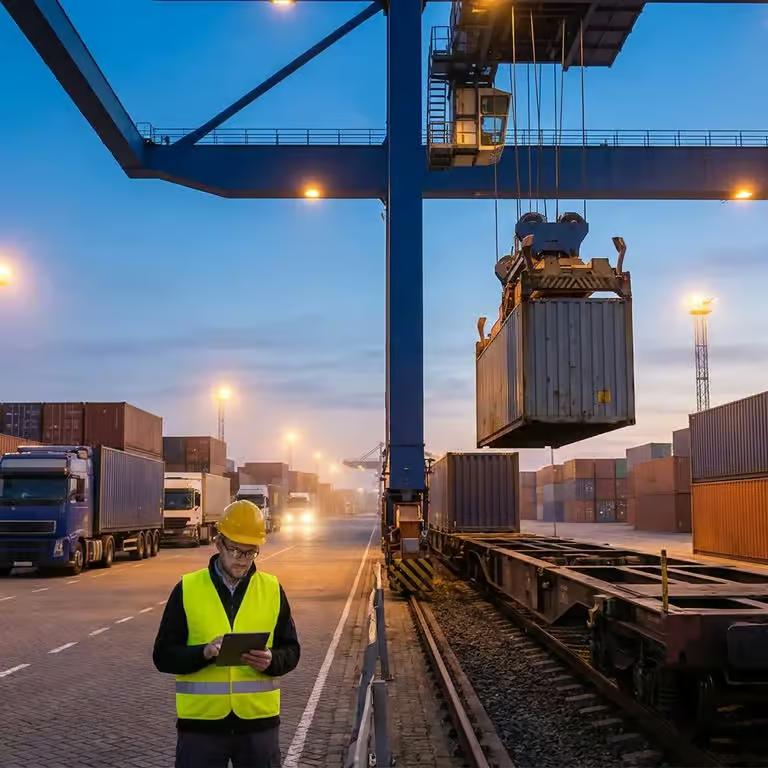


Tell us what needs moving.
Tell us what you're shipping, where it moves, how often, and what matters to you. We'll work out the right setup from there.