

Export from Belgium
 Roeslan Ozdoyev4 min read
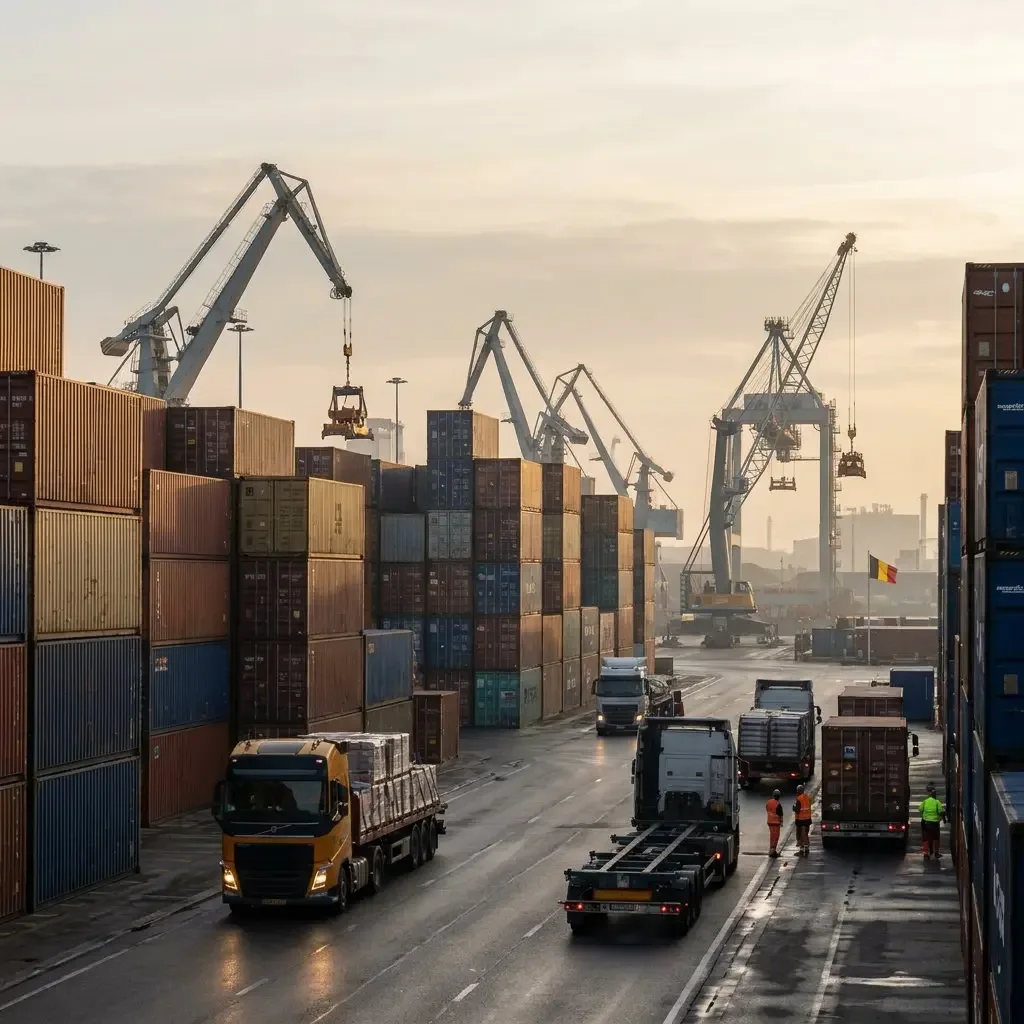
Belgium exports far more than its size suggests. Its central EU location, dense transport connections and cross-border supply chains make it one of Europe’s most trade-intensive economies. For many businesses, exporting from Belgium is less about reaching one distant market and more about plugging into a wider regional and global network.
This overview explains the main product groups behind Belgian exports, how exports compare with imports, where Belgian goods usually go, and what operational checks matter before a shipment leaves. One important caveat: trade data varies by source, reporting year, valuation method and whether you are looking at goods or services, so annual and monthly figures should always be read in context.
Why Belgium is such a strong export base
Belgium is a strong export base because it combines location, productivity and specialization. It sits in the middle of dense European trade flows, but its success is not built on low-cost output. It is built on multilingual talent, advanced manufacturing, chemicals, pharmaceuticals, machinery and other high-value sectors. Its EU policy and business-hub role also strengthens international decision-making links. That is a big part of why Belgium is wealthy: it creates, processes and moves high-value goods through global value chains at scale.
Belgium’s trade picture at a glance
Belgium is both a major exporter and a major importer, which is normal for a hub economy inside regional supply chains.
Snapshot | Exports | Imports | How to read it |
|---|---|---|---|
2021 goods trade | Strong rebound after the pandemic shock | Strong rebound in energy, inputs and components | Use full-year merchandise data for year-on-year comparison |
2022 goods trade | Still very high by European standards | Also very high, showing Belgium’s role as both buyer and seller | Exports are often valued at the export border; imports often include freight and insurance to the import border |
Monthly data | Useful for short-term direction | Useful for short-term direction | Do not compare one month with a full year |
Method note | Source totals can differ | Source totals can differ | Keep goods trade separate from services datasets and compare like with like |
The product categories that dominate Belgium’s trade
Belgium’s top export products are usually high-value industrial or intermediate goods rather than only finished consumer items.
Category | Typical export role | Typical import role |
|---|---|---|
Chemicals and pharmaceuticals | Flagship high-value products, ingredients and formulations | Feedstocks, active ingredients and specialty inputs |
Machinery and electrical equipment | Industrial equipment, components and electronics | Capital goods, parts and technical components |
Vehicles and transport equipment | Recurring exports of vehicles and parts | Vehicles, components and distribution flows |
Mineral products and refined fuels | Large-value energy-related trade | Structurally important energy inflows |
Plastics, metals and industrial materials | Common semi-finished and intermediate goods | Inputs for manufacturing and re-export |
Food and agricultural exports Belgium is known for
In food trade, Belgium is best known for:
- Chocolate, cocoa preparations and confectionery
- Beer and other brewing products
- Potatoes and potato products, especially processed and frozen lines
- Dairy, bakery and other prepared-food exports
- Vegetables, meat and broader agro-food processing for nearby markets
These products matter commercially, but they sit inside a much broader export base led by industrial and intermediate goods.
Where Belgian exports go - and how concentrated they are
Belgian exports are heavily oriented toward nearby European markets. In most years, neighboring countries and other EU partners absorb a large share of outbound goods because transit times are shorter, rules are more harmonized and supply chains often cross borders several times before a product is finished. Markets such as Germany, France and the Netherlands are therefore structurally important, while the UK, the US and other non-EU destinations matter more selectively by sector.
In plain English, export concentration means Belgium depends more on a limited set of major markets than a widely dispersed exporter would. That can be efficient: familiar routes, stable demand and repeat compliance patterns are easier to manage at scale. But it also creates exposure if a key market slows, changes product rules or faces disruption. Concentration measures should still be used carefully. They change by year, product mix, energy prices and data source, so they are interpretation tools rather than fixed truths.
Where India fits in Belgium’s export picture
India matters as a destination for selected Belgian export sectors, but it does not define Belgium’s overall export map. The right question is not simply whether Belgium exports to India, but which products have real demand, workable margins and feasible market access. Shipments to India can involve different tariffs, product standards, certificates and customs clearance requirements than sales within Europe, so planning needs to be destination-specific from the start.
What businesses need to check before exporting from Belgium
Before goods leave Belgium, check the basics:
- Confirm the HS code, product description, customs value, origin, EORI number and any permit or export-control requirement.
- Prepare the export declaration, commercial invoice, packing list and transport documents, plus certificates or origin paperwork if the destination asks for them.
- Check destination-country duties, taxes, labeling, licensing and other non-tariff rules, because they can change landed cost and release timing.
- Choose the right freight mode, whether ocean freight or a multimodal setup, and align warehousing, loading, booking cutoffs and customs handoff to reduce delay risk.
- At Ocean Quest Logistics, as a freight forwarder in Belgium, we coordinate customs brokerage, warehousing, shipment tracking and last-mile delivery handoffs when businesses need one accountable export setup.
Exporting from Belgium vs exporting to Belgium: the customs difference
Exporting from Belgium and exporting to Belgium are different customs events. When goods leave Belgium, the focus is on outbound declarations, export documents, proof of exit and any origin or control requirements tied to the destination. When goods arrive in Belgium, the process shifts to import clearance, duties, VAT and arrival-side inspections or permits. Using an import checklist for an export movement is one of the simplest ways to create avoidable delays and document errors.
Ready to move your next shipment?
Tell us what you're moving, where it needs to go and how often. We'll work out the right setup from there.